Interesting Facts About Hexham
From England's oldest purpose-built prison and a 1,300-year-old Saxon crypt to a bloody militia riot, a glove-making boom and one of the country's most scenic racecourses, here are the stories that make Hexham so distinctive.
Hexham wears its long history lightly. Wander through the Market Place, past the Abbey and up the old shopping streets, and it is easy to forget that this Tynedale town has one of the most eventful pasts in the North East. For a place of around 13,000 people it packs in an extraordinary run of firsts, oddities and dramas: the country's first purpose-built prison, a Saxon crypt older than almost any church in England, a market square that once ran with blood, and a leather trade that clothed the nation's hands. Here is a roundup of the facts that make Hexham worth boasting about.
Hexham Abbey has a 1,300-year-old Saxon crypt
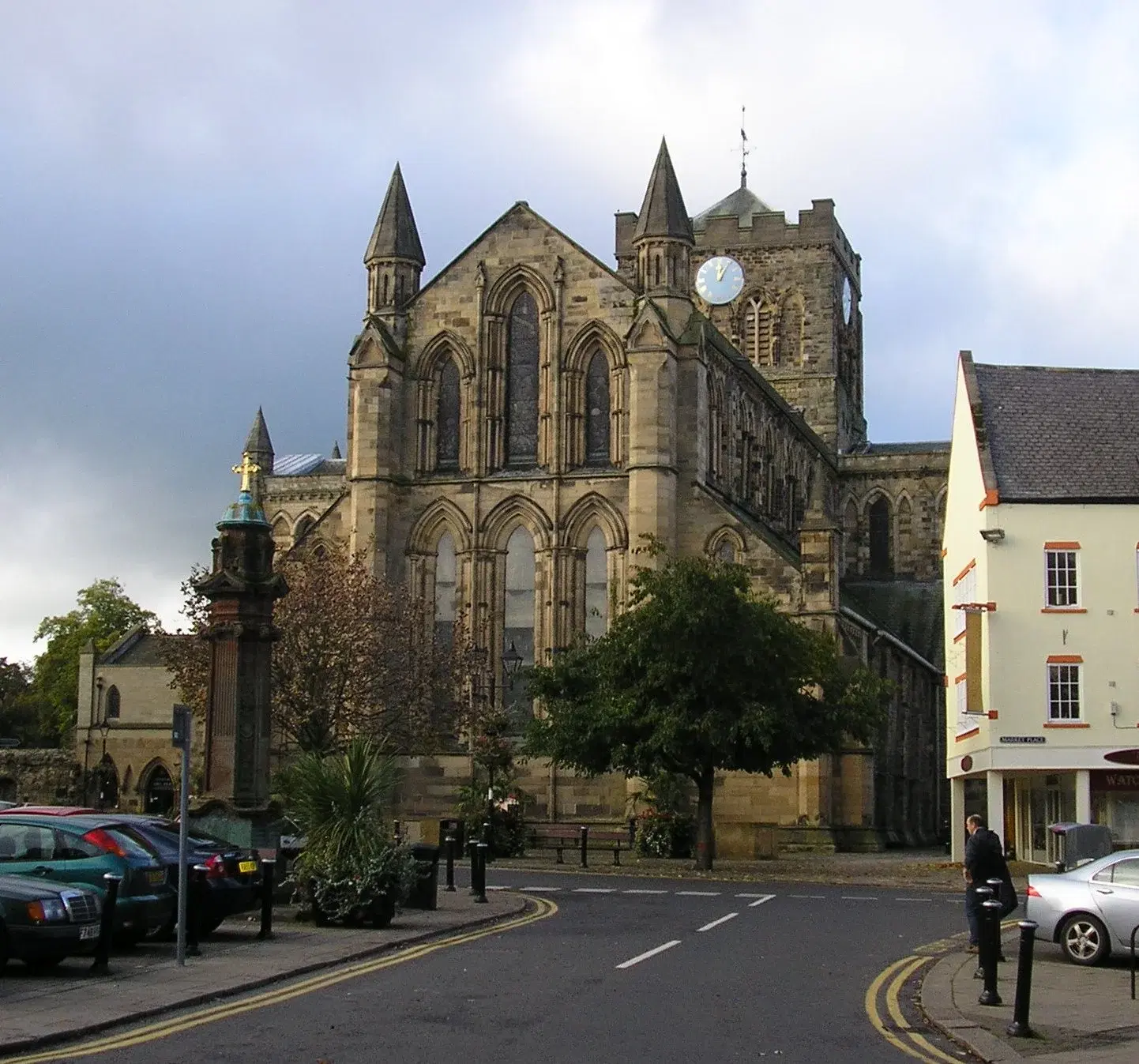
The story of Hexham begins in 674 AD, when St Wilfrid, the first native-born Saxon Bishop of York, founded a monastery here on land granted by Queen Etheldreda of Northumbria. The great church you see today at Hexham Abbey largely dates from around 1170 to 1250, but hidden beneath it is something far older. The Anglo-Saxon crypt is the only part of Wilfrid's original church to survive intact, and it was built partly from Roman stone recycled from the fort and town at nearby Corbridge. You can still walk down into it, more than 1,300 years on, and some of the blocks around you carry Roman tool marks and inscriptions.
Best for: Best for a genuine national treasure: one of the finest and earliest Anglo-Saxon crypts in the country.
The Old Gaol is England's first purpose-built prison
Standing on Hallgate, Hexham Old Gaol holds a remarkable claim: it is recognised as the first purpose-built prison in England. It was ordered in 1330 by William Melton, Archbishop of York, who as lord of the liberty of Hexhamshire wanted somewhere secure to hold his prisoners, and it was completed in 1333. Before this, prisoners were usually held in castles or in buildings adapted for the job. Like the Abbey crypt, the gaol was built using stone reclaimed from the Roman remains at Corbridge. Today it is a museum, and visitors descend through the building, part of the way by a glass lift, into the atmospheric medieval dungeon.
The Market Place saw a massacre in 1761
On 9 March 1761, a day still remembered as Bloody Monday, thousands of people from Hexhamshire and the surrounding dales crowded into the Market Place to protest against a new ballot for compulsory militia service. Magistrates had drawn up a detachment of the North Yorkshire Militia in the square in front of the Moot Hall. After hours of stand-off the Riot Act was read, the crowd surged forward, and the soldiers opened fire. Around 45 people were killed. The episode earned the regiment the grim nickname of the Hexham Butchers, and it remains one of the bloodiest civil disturbances in the region's history.
Best for: Best for a sobering piece of local history: the peaceful Market Place was once the scene of a deadly riot.
A battle in the Wars of the Roses was fought nearby
Hexham gave its name to a decisive clash of the Wars of the Roses. On 15 May 1464 a Yorkist army led by John Neville caught a small Lancastrian force camped in a meadow by Devil's Water, just south of the town. The Lancastrians were pinned against the river and quickly broke. Their commander, Henry Beaufort, Duke of Somerset, was captured and beheaded in Hexham within hours. The Battle of Hexham effectively ended Lancastrian resistance in the north and brought a lull to the wars for several years.
Hexham once clothed the nation's hands
For well over a century Hexham was a leather town. Tanners used the fast-flowing burns around Gilesgate and Cockshaw to prepare hides, and the town became famous for a soft sheepskin glove known as the Hexham Tan. The trade was enormous: by the early 1820s the leather industry here employed well over a thousand people and turned out more than 20,000 dozen pairs of gloves a year. Whole streets were given over to it, and hundreds of women and girls, known as gloveresses, sewed hides on their doorsteps. Cheaper imports saw the industry fade from the 1830s, but street names such as Tanners Row still recall it.
One of Britain's most scenic racecourses
High on the moorland above the town, at High Yarridge, sits Hexham Racecourse, a National Hunt jump track with sweeping views over the Tyne Valley. Racing on the site goes back as far as 1793, though the modern course was laid out from 1890 by local businessman Charles Henderson. Its signature feature is a punishing uphill climb to the finish that has decided many a dramatic race, and its elevated setting has earned it a reputation as one of the most scenic and intimate courses in the country.
A market town with the trophies to prove it
Hexham's charm is not just a matter of local pride. In 2005 the town was named England's Favourite Market Town by Country Life magazine and won a Britain in Bloom award. More recently it has repeatedly topped surveys of the happiest places to live in Britain. Add the historic weekly market, the independent shops such as Cogito Books on St Mary's Chare, and the greenery of the Sele beside the Abbey, and it is easy to see why Hexham people are so fond of their town.
Frequently asked questions
Why is Hexham Old Gaol so important? It is recognised as the first purpose-built prison in England. It was ordered in 1330 by the Archbishop of York and completed in 1333, using stone reclaimed from the Roman remains at Corbridge. Before it was built, prisoners were normally held in castles or in buildings adapted for the purpose.
What was the Hexham Riot of 1761? On 9 March 1761, remembered as Bloody Monday, a large crowd gathered in the Market Place to protest against a new militia ballot. When the Riot Act was read and the crowd surged forward, the North Yorkshire Militia opened fire, killing around 45 people. The regiment was afterwards nicknamed the Hexham Butchers.
How old is Hexham Abbey? A monastery was founded on the site by St Wilfrid in 674 AD, and its Anglo-Saxon crypt survives to this day, more than 1,300 years later. The main church you see now largely dates from around 1170 to 1250 and is still an active parish church with free entry.
Have a suggestion? Get in touch.
Never miss what’s on
Join the weekly Hexham.live digest — the best events, news and local tips, straight to your inbox. Free, one email a week.
What's On
Family Glow Play Zone, Queen's Hall
11:30 AM · Queen's Hall Arts Centre, Beaumont Street, Hexham NE46 3LS
Cara Dillon, Queen's Hall
7:30 PM · Queen's Hall Arts Centre, Beaumont Street, Hexham NE46 3LS
Hexham Abbey Festival of Music & Arts 2026
Various · Hexham Abbey, Beaumont Street, Hexham NE46 3NB