Historic Trades and Crafts of Hexham
Leather tanning, the Hexham Tans glove trade, Fentimans botanical brewery, corn milling, and the railway.
Hexham has been a working town for well over a thousand years. Long before tourism or retail defined it, the town built its reputation on honest craft: the hides of Northumbrian sheep, the waters of its burns, the grain from Tyne Valley fields, and the iron discipline of railway engineering.
The Medieval Market
In 1239, Henry III granted Hexham a weekly Monday market and a two-day St Luke's Fair in October. That charter transformed the town. The Market Place, which still anchors Hexham today, drew farmers and merchants from the surrounding dales and became the commercial engine of the Tyne Valley.
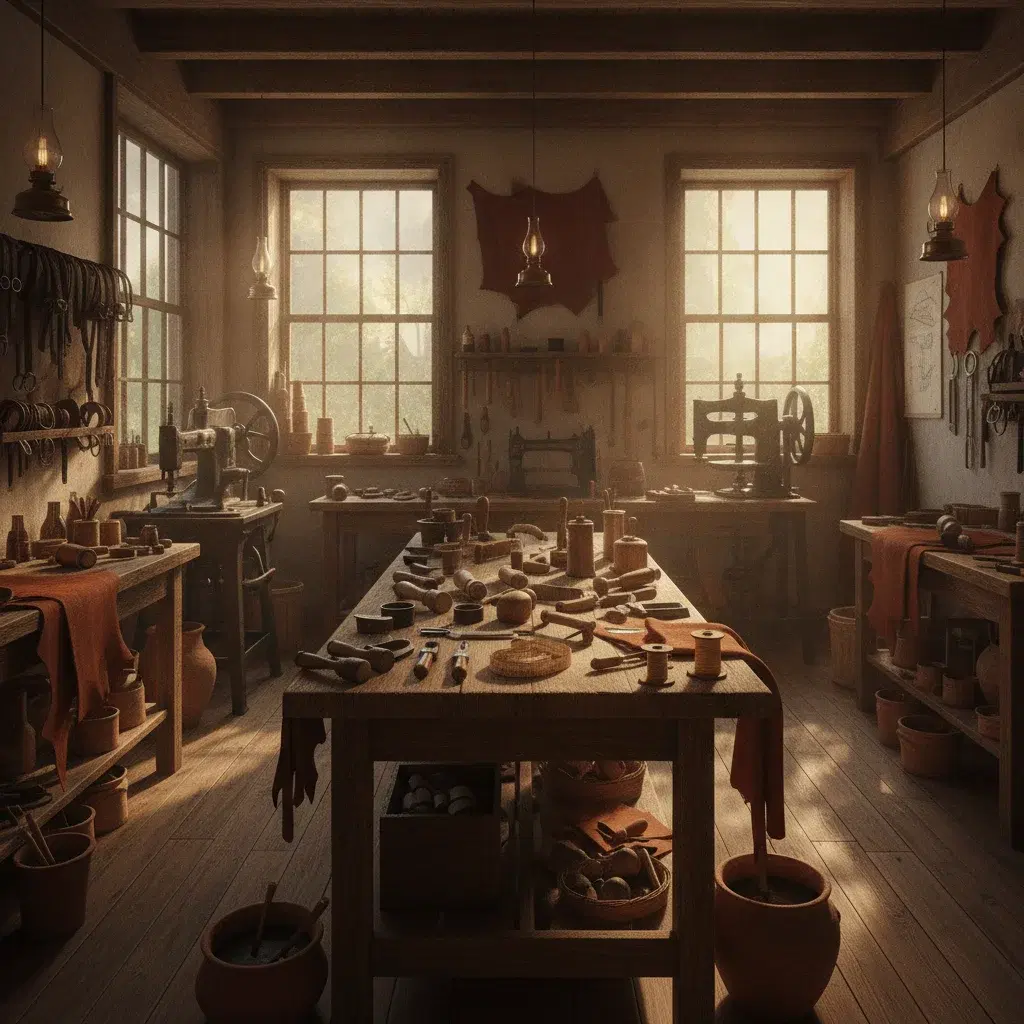
Leather Tanning and the Glove Trade
If any single industry defines Hexham's economic history, it is leather. By the 17th century, tanneries clustered along Burn Lane and the area around High Shield, fed by fast-flowing waters ideal for softening and preparing hides.
By the early 19th century, Hexham had become nationally famous for Hexham Tans, sheepskin gloves prized for their quality and distinctive colour derived from vegetable tanning with oak bark. The scale was remarkable: 77 men and boys employed as leather dressers and glove-cutters, 40 boys as dusters, and over 1,100 women employed as sewers. Each year, more than 23,500 dozen pairs of gloves were made and exported.
The trade declined sharply in the 1830s as cheaper imported gloves undercut local production. But the memory persists, the Tannery, now a venue on Tyne Green Road, takes its name from this heritage, and Tanners Row survives as a street name near Cockshaw Burn.
Brewing and Botanical Drinks
Hexham's most enduring contribution to British drinks culture is Fentimans, the botanical brewery founded in 1905 when Thomas Fentiman acquired a ginger beer recipe from an indebted tradesman. He sold the brew door-to-door by horse and cart in distinctive ceramic jars called Grey Hens. More than 120 years later, Fentimans is still based in Hexham, still family-owned, and still using a fermentation process descended from that original recipe.
Corn Milling
The waters that powered the tanneries also drove corn mills. Medieval Hexham had mills below the river bridge and a windmill on the Sele. Dipton Mill Road traces a route past sites where grain and water once combined to supply the town's bakeries.
The Railway
Hexham joined the rail network in 1837, when the Newcastle and Carlisle Railway ran its first trains through the Tyne Valley. The station brought new economic life and Hexham became a maintenance and servicing point for the line. Railway workers became a significant part of the working community.
These trades shaped the streets, the buildings, the family names, and the working rhythms of a town that is still defined by its practical, productive past.
Local businesses mentioned
Never miss what’s on
Join the weekly Hexham.live digest — the best events, news and local tips, straight to your inbox. Free, one email a week.
What's On
Destination: Elton — The Hits of Elton John
7:30 PM · Queen's Hall Arts Centre, Beaumont Street, Hexham NE46 3LS
Hexham Farmers' Market (late October)
9:00 AM · Market Place, Hexham
Fleece to Fabric: The Textiles of Vindolanda
See booking · Roman Vindolanda, Chesterholm, Bardon Mill NE47 7JN