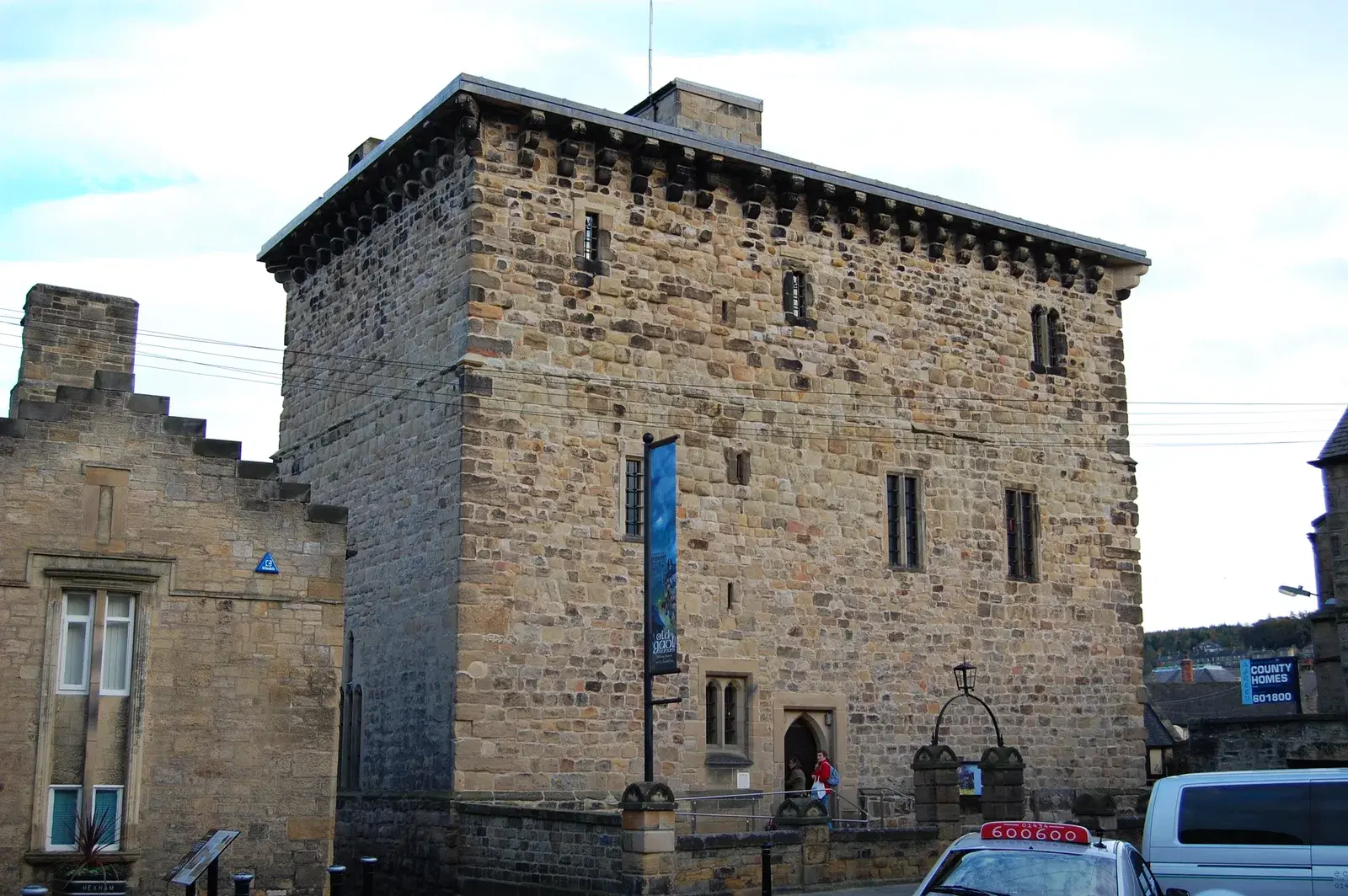
Hexham Old Gaol: England's First Purpose-Built Prison
Built in 1333 from Roman stone, Hexham Old Gaol is the earliest recorded purpose-built prison in England, now an atmospheric museum.
The Oldest Purpose-Built Prison in England
Tucked into Hallgate in the historic centre of Hexham, the Old Gaol is easy to miss unless you know what you are looking for. What makes it extraordinary is its date. Completed in January 1333, it is the earliest recorded purpose-built prison in England, a building constructed from the ground up for the sole purpose of detaining prisoners, at a time when most jails were castle dungeons or improvised chambers.
Why the Archbishop Built a Prison
The story of the Old Gaol begins with power. In the medieval period, Hexhamshire was a Liberty, a semi-autonomous jurisdiction under the authority of the Archbishop of York, not the Crown. The Archbishop had the rights of a king in this territory: he could levy taxes, hold courts, and administer justice.
In July 1330, Archbishop William Melton wrote to Thomas Fox, his Receiver at Hexham, demanding that a proper gaol be built where prisoners could be securely held. The building was completed in January 1333. Its construction material was characteristically practical: Roman stone quarried from the ruins of the fort at Corbridge, three miles to the east.
The result was a purpose-built tower of four storeys, guard rooms, offices, and secure cells, expressing the Archbishop's wealth, authority, and intention to hold and try offenders on his own terms.
The Border Reiver Years
From the 14th to the 17th centuries, Hexham lay within the English Middle March, the heart of Reiver country. English and Scottish families raided across this landscape for centuries: stealing cattle, burning steadings, killing rivals, and demanding blackmail (protection money, the origin of the modern word) from farming communities on both sides of the border.
The Old Gaol became the principal place of detention for the Middle March, holding captured Reivers awaiting trial and punishment. In 1538 its walls were tested dramatically: a band of armed Reiver horsemen broke into the building and freed both their imprisoned companions and a Catholic priest being held by the Protestant authorities.
From Prison to Museum
The Old Gaol functioned as a place of detention for nearly five centuries. By the early 19th century its use was declining, and in 1820 it finally closed as a functioning prison. Today the Old Gaol is managed as part of the Museums Northumberland network and is a Grade I listed building.
What to See
The museum uses the Old Gaol's original spaces to tell two interlocking stories: the history of the building itself, and the wider story of Border Reiver culture and the medieval justice system.
Ground-floor galleries introduce the Border Reivers, their family networks, their raiding patterns, their weapons, and the brutal punishments that awaited the unlucky ones. Upper floors explore the experience of detention: cell conditions, court procedures, the range of offences that could land a person here, and the figures who controlled the machinery of justice in Hexhamshire.
The building itself is as much an exhibit as anything in the cases. The Roman stonework in the walls, salvaged from Corbridge and already more than a thousand years old when the Gaol was built, connects the site to the deep history of the Tyne Valley.
Practical Information
The Old Gaol is on Hallgate in Hexham town centre, a two-minute walk from the Market Place and the Abbey.
Opening hours: Wednesday to Sunday, 10am-4pm. Open seven days a week during Northumberland school holidays.
Admission: Adults £8; concessions £7. A single admission gives unlimited repeat visits for 12 months.
Local businesses mentioned
Never miss what’s on
Join the weekly Hexham.live digest — the best events, news and local tips, straight to your inbox. Free, one email a week.
What's On
Destination: Elton — The Hits of Elton John
7:30 PM · Queen's Hall Arts Centre, Beaumont Street, Hexham NE46 3LS
Hexham Farmers' Market (late October)
9:00 AM · Market Place, Hexham
Fleece to Fabric: The Textiles of Vindolanda
See booking · Roman Vindolanda, Chesterholm, Bardon Mill NE47 7JN